
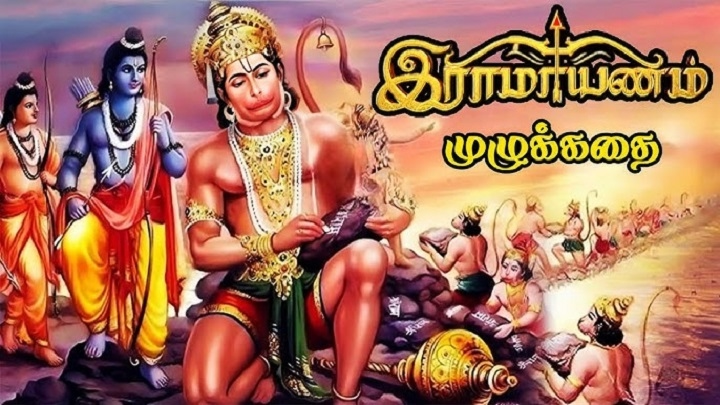
The Ramayanam, one of the greatest epics in Indian literature, is an ancient tale of love, virtue, and the victory of good over evil. Originating in Sanskrit, it has been translated into various regional languages, including Tamil. In Tamil literature, the Ramayanam holds a special place, influencing not only religious thought but also cultural expressions through centuries.
This article explores the story of the Ramayanam in Tamil, its characters, major events, and lessons that continue to resonate with millions. Tamil versions of the Ramayanam have been passed down through generations, deeply ingraining the moral and philosophical lessons into Tamil society.
Overview of the Ramayanam Story
The Epic Tale of Lord Rama

The Ramayanam narrates the life and adventures of Lord Rama, an incarnation of Lord Vishnu, and his quest to rescue his wife, Sita, from the demon king Ravana. The story covers significant events, from Rama’s birth to his exile, his marriage to Sita, and the great battle against Ravana.
The Ramayanam is divided into several sections called Kandas (chapters). Each section is rich with philosophical discourses, moral values, and important teachings, forming the backbone of the epic.
The Tamil Version of the Ramayanam
While the Sanskrit version of the Ramayanam is attributed to the sage Valmiki, the Tamil version of the epic is primarily known through the works of the famous poet Kambar. Kambar’s Kamba Ramayanam stands as one of the most beloved and cherished renditions of the original epic, written in Tamil during the 12th century.
In Kambar’s version, the essence of the original story is maintained, but it also reflects Tamil culture, language, and thought. This version not only highlights the divine nature of Lord Rama but also provides deeper insights into the roles of the supporting characters.
Key Characters in the Ramayanam
Lord Rama: The Hero
Lord Rama, the protagonist of the Ramayanam, is portrayed as the ideal man, embodying virtues like courage, integrity, and devotion to dharma (righteousness). He is the eldest son of King Dasharatha and Queen Kaushalya and is exiled to the forest for 14 years due to the demands of his stepmother, Kaikeyi.
Rama’s unwavering commitment to duty and honor is the driving force of the narrative. His quest to rescue his wife, Sita, is not just a physical journey but also a spiritual one, symbolizing the triumph of good over evil.
Sita: The Ideal Woman
Sita, the wife of Rama, is known for her purity, devotion, and unwavering love for her husband. Her abduction by Ravana sets the stage for the epic battle that follows. Sita’s role in the Ramayanam represents the ideal woman who values righteousness and sacrifice, serving as a model of patience and faith.
Lakshmana: The Loyal Brother
Lakshmana, Rama’s younger brother, is known for his loyalty and selflessness. He accompanies Rama into exile and plays a crucial role in the battle against Ravana. His devotion to Rama is a central theme in the Ramayanam.
Ravana: The Villainous Demon King
Ravana, the king of Lanka, is the antagonist of the Ramayanam. A mighty demon with immense power, Ravana abducts Sita, triggering the war between him and Rama. Although Ravana is portrayed as a scholar and a devotee of Lord Shiva, his pride, arrogance, and obsession with power lead him to evil deeds.
Important Events in the Ramayanam
The Exile of Rama
Rama’s exile to the forest is a pivotal moment in the Ramayanam. His stepmother, Kaikeyi, demands that Rama be sent into exile to secure the throne for her own son, Bharata. Despite the injustice, Rama accepts his fate with grace and departs for the forest, accompanied by Sita and Lakshmana.
The Abduction of Sita
The turning point of the story occurs when Ravana kidnaps Sita, leading to Rama’s desperate search to rescue her. This event marks the beginning of the epic’s battle between good and evil, symbolizing the challenges faced by those who remain steadfast in their righteousness.
The War with Ravana
The final act of the Ramayanam revolves around the war between Rama and Ravana. With the help of his allies, including the monkey king Sugriva and his army of monkeys, Rama wages a fierce battle against Ravana’s forces. The war culminates in Rama’s victory and the rescue of Sita.
The Return to Ayodhya
After the defeat of Ravana, Rama, Sita, and Lakshmana return to their kingdom, Ayodhya, where Rama is crowned king. This event marks the triumph of good over evil, as Lord Rama’s return is celebrated with great joy by the people of Ayodhya. His reign, known as Rama Rajya, symbolizes an era of peace, justice, and prosperity.
Philosophical and Moral Lessons in the Ramayanam
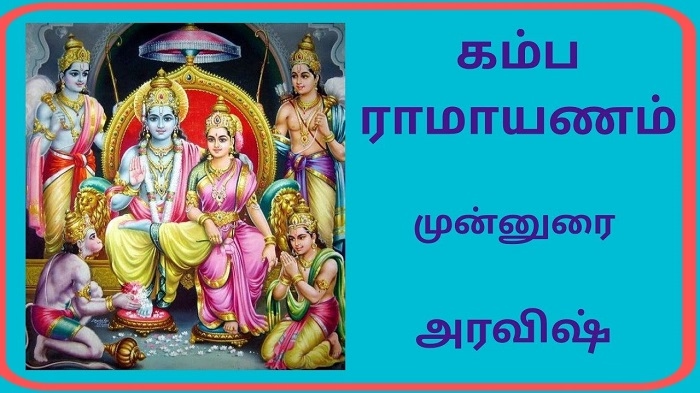
The Ramayanam is not merely a tale of adventure and battle; it is also rich with moral and philosophical teachings. The epic offers valuable lessons on duty (dharma), the importance of righteousness, loyalty, sacrifice, and the consequences of pride.
- The Importance of Dharma: The Ramayanam emphasizes the significance of adhering to dharma in all aspects of life. Lord Rama’s life is a perfect example of living according to one’s duties, even in the face of adversity.
- The Power of Loyalty: The characters of Rama, Lakshmana, and Sita demonstrate the importance of loyalty to one’s family, friends, and values. Their devotion to each other and to their principles is a key theme in the epic.
- The Dangers of Arrogance: Ravana’s downfall serves as a cautionary tale about the dangers of pride and arrogance. Despite his immense power and intelligence, Ravana’s ego leads to his eventual destruction.
- The Role of Devotion: Devotion plays a central role in the Ramayanam. Lord Rama’s unwavering faith in dharma, Sita’s devotion to Rama, and Hanuman’s devotion to Rama are all key examples of how devotion can shape a person’s destiny.
FAQs about Ramayanam Story in Tamil
What is the significance of the Ramayanam in Tamil culture?
The Ramayanam in Tamil culture is not only a religious text but also a cultural cornerstone. It influences Tamil literature, art, and music, with many interpretations, including Kambar’s Kamba Ramayanam, making it widely revered.
Who wrote the Tamil version of the Ramayanam?
The Tamil version of the Ramayanam, known as Kamba Ramayanam, was written by the poet Kambar in the 12th century. This rendition is one of the most important works of Tamil literature.
What is the main theme of the Ramayanam?
The central theme of the Ramayanam is the triumph of good over evil, exemplified through the character of Lord Rama. It also explores concepts of duty, loyalty, and righteousness.
How does the Ramayanam influence Tamil society?
The Ramayanam has deeply influenced Tamil society, shaping cultural values and practices. It teaches important virtues such as honesty, sacrifice, and devotion, which continue to resonate with people today.
Is there a difference between the Sanskrit and Tamil versions of the Ramayanam?
While the essence of the Ramayanam remains the same in both the Sanskrit and Tamil versions, the Tamil rendition by Kambar adds regional flavor, cultural references, and nuances that reflect Tamil traditions and beliefs.
The Ramayanam story in Tamil, through its historical and literary significance, continues to inspire and guide generations of people. The tale of Lord Rama’s virtues, his battle against Ravana, and the ultimate triumph of good over evil offers timeless wisdom. The Tamil version, Kamba Ramayanam, remains a masterpiece of literature and an essential part of Tamil heritage.