
Project management has always involved planning, tracking, and problem-solving. But even the best project plans can possess risks of failure when timelines are not met, late detection of risks, or overavailability of unstructured data. Many professionals still assume these challenges are just “part of the job.” But in realty the AI is quietly proving otherside to fix these issues.
According to a 2025 study published in the International Journal of Engineering, Science, Technology and Innovation (IJESTI), organizations using AI in project management reported 15–40% efficiency improvements and 20–30% cost reductions, mainly through better forecasting and automation. These results explain why AI is no longer optional—it’s becoming essential.
1. Smarter Project Planning with AI-Powered Scheduling
Traditional project planning depends heavily on templates and previous experience. Even though helpful, this approach mostly misses project-specific details. AI changes this by creating schedules based on real data, context, and constraints.
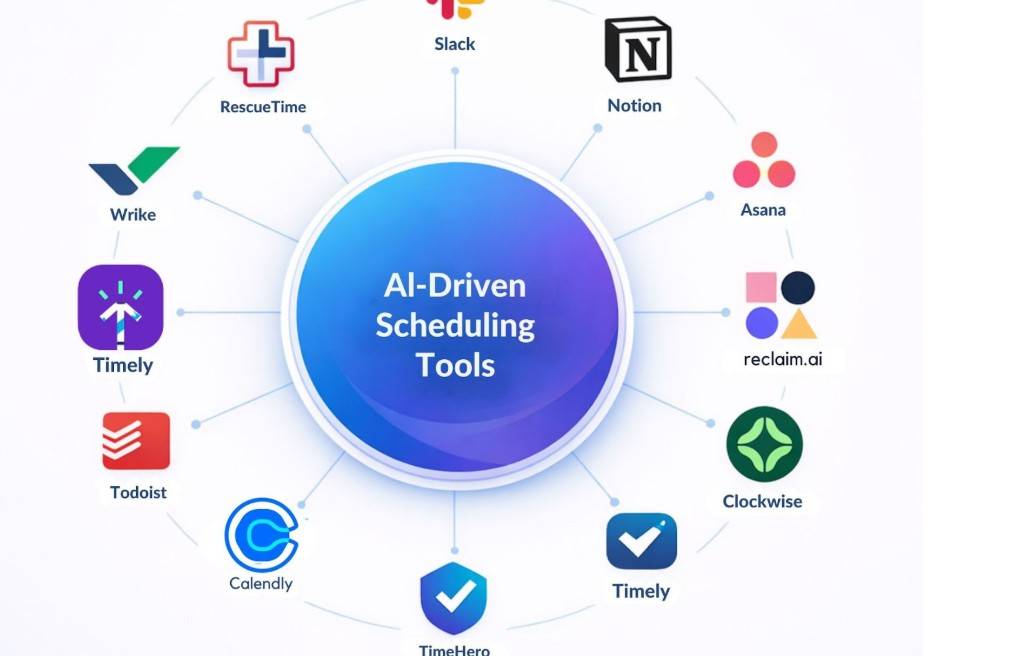
AI-driven scheduling tools analyze historical project data, scope details, timelines, and dependencies to generate realistic work breakdown structures (WBS). Instead of manually building schedules task by task, project managers can describe the project context and receive a complete schedule within seconds.
According to a Forbes Technology Council case study, AI-generated schedules significantly reduced planning time and improved accuracy by adjusting timelines based on project complexity and historical performance
Why is this important:
Automating schedule creation frees project managers from tedious planning tasks, allowing them to focus on critical activities like
- Team leadership,
- Stakeholder communication
- Strategic decision-making

AI handles the computational heavy lifting, analyzing dependencies, optimizing timelines, and allocating resources, but managers apply their expertise to refine plans and address complex human factors that algorithms cannot solve.
2. Proactive Risk Identification and Mitigation
| Risk management mostly depends on experience and intuition. |
Even though valuable, this approach can overlook hidden risks, especially in complex or fast-moving projects. AI strengthens risk management by spotting patterns humans may miss.
AI systems use machine learning and natural language processing (NLP) to scan project documents, emails, reports, and past data. NLP simply means AI can “read” and understand text. By doing this, AI can identify potential risks early and rank them based on probability and impact.
AI-enhanced risk identification improves decision-making and risk mitigation by analyzing large volumes of structured and unstructured project data
Practical example:
In large infrastructure or IT projects, AI monitors project data in real-time to detect early warning signs. It analyzes resource availability, timelines, and spending patterns to identify potential problems, like team shortages, scheduling conflicts, or budget overruns, before they escalate, allowing project managers to take corrective action proactively.
3. Better Cost Estimation and Resource Optimization
Accurate cost estimation is one of the hardest parts of project management. Small errors early on can lead to major budget overruns later. AI helps by improving cost forecasting and resource allocation.
AI-powered cost models distribute budgets using patterns such as S-curves, which show how costs typically rise and fall during a project lifecycle. These models adapt automatically when timelines or resources change.
Harrisburg University’s research paper, “ Exploring the impact of artificial intelligence on project management across the manufacturing, technology, and construction industries,” reveals that 46% of professionals already use AI for task automation and cost-related decision support, leading to improved efficiency and productivity across manufacturing, technology, and construction projects
Key Benefit:
AI generates cost estimates and budget recommendations based on historical data and project parameters, but final decisions remain with project managers. This approach combines AI’s analytical capabilities with human expertise and judgment, ensuring managers maintain full control when leveraging accurate, data-driven insights for more informed financial planning.
What This Means for Project Managers
AI is not replacing project managers; it’s reshaping their role. Routine tasks like scheduling, reporting, and risk logging are increasingly automated. This allows professionals to focus on strategy, leadership, and stakeholder communication.
AI adoption is shifting project managers from tactical execution to strategic oversight, improving overall project outcomes while reducing stress and manual effort.
Choosing the PMP certification Course, why because it now incorporates AI and emerging technologies into its syllabus, preparing professionals for modern project management realities.
As AI revolutionizes scheduling, risk prediction, and resource optimization, PMP-certified managers gain essential knowledge to leverage these tools effectively while maintaining strategic oversight, combining traditional project management expertise with cutting-edge AI-driven methodologies for competitive career advantage.
Final Thoughts
Do many professionals think that AI in project management is still an experimental technology? That’s not. From smarter planning and proactive risk management to better cost control, AI is delivering measurable results across industries. The most successful teams treat AI as a reliable assistant, not a replacement, using it to make better decisions, faster.
For professionals at any stage of their career, understanding how AI supports project management is quickly becoming a core skill, no longer considered a future trend.