
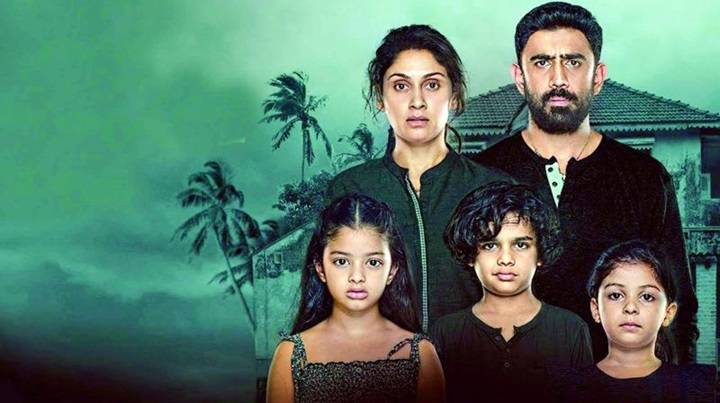
Barot House, the mind-bending 2019 psychological thriller featuring Amit Sadh and Manjari Fadnnis, captured audience attention with its mysterious plot of family trauma and unveiling surprises. However, the most pressing question remains: Is Barot House based on a true story? We bust the myths related to the movie, delve into its reality-based inspirations and interpret the grim psychological aspects that are the cause of the horror and the disturbance of this incredible story.
Overview of the Barot House Plot
The Movie Premise
Barot House is set in a typical upper-middle-class locality visually presenting a usual life. The story is about Amit Barot, a father, whose serene family life gets derailed when his one of the children is found dead under suspicious circumstances. As the story moves forward, the characters themselves in the family pointing at each other indicates the most unthinkable fact that one of the kids is the murderer.
Key Themes
The movie delves into the issues of paranoia, trust, mental illness, and problems in a family unit and also very scary concept of the presence of the most unthinkable evil even inside a child.
Is Barot House a Real Story?
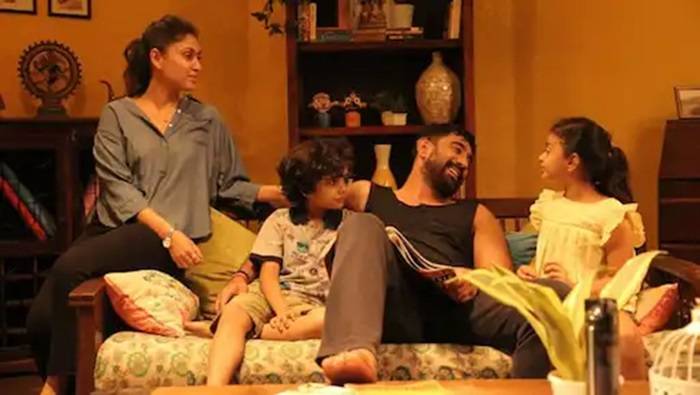
Loosely Inspired by Real Incidents
While it isn’t a direct dramatization of a single case, the Barot House story draws its dirtied fabric from various incidents in which children became the perpetrators of dark family murders. The creators have taken the theme from these kinds of incidents, that entirely shock the general public and experts, to erect the fictional world of Barot House.
Similarities with Real-Life Indian Cases
Most notably, the movie’s eerie echoes can be uncovered in the juvenile crime cases that have stirred up the Indian media and community, and particularly in the acts of violence against siblings committed by children in these cases. Although the occurrences are very few and far between, reports have been made regarding such incidents in India, and their psychological side has been the main factor behind the movie’s plot.
Understanding the Psychology of Child Killers
Is It Possible for a Child to Murder?
Among the disturbing aspects the movie touches on is the question of whether a child can actually plan and execute a murder. Studies in psychology argue that a minor under abnormal psychological conditions such as sociopathy, conduct disorder and severe emotional trauma, might develop aggression, manipulation, or violence even in extreme cases.
Mental Illness and Lack of Empathy
Children subjected to severe neglect, maltreatment, or psychological disorders may lose the ability to empathize, exhibit violent tendencies, or demonstrate signs of early-onset psychopathy. In such rare instances, the behavior may be directed at the harming of siblings or other family members.
Red Flags Often Overlooked
Evidence from the real-life incidents shows that the early signs—which might be cruelty to animals, emotional detachment or manipulative behavior—are usually very much overlooked or considered a passing phase, thus the tragic consequences are inevitable. The kid in Barot House is guilty of many such red flags, thus the story is shockingly credible.
How the Film Blurs Fiction and Reality
Realistic Characters and Reactions
Barot House keeps the viewer engaged through its tough, vivid, and truthful presentation of the disintegration of a family. The film, unlike some sensationalized thrillers, is a character-driven piece, showing the mother’s denial, the father’s desperation, and the siblings’ confused guilt, among other things, all of which are emotionally realistic.
Silent Settings and Tense Atmosphere
The scant use of background music, close-up camera shots, and the small, confining spaces of the house all work together to convey the message that the source of fear is not outside the house, but inside. Obviously, this corresponds with the emotional suffocation that usually accompanies abuse and which is experienced by the victims in their “homes”.
Unresolved Questions and Open Endings
Similar to the reality of criminal investigations, the movie offers no straightforward answers. It is for the audience to decide what the child’s behavior was all about—evil, mental disorder, or an outcome of a toxic environment? The uncertainty here is a reflection of the complexity of psychological disorders in the real world.
Impact on Indian Psychological Thrillers
A Shift from Supernatural to Psychological Horror
Barot House represented a welcome change rather than a continuation in a genre that had been largely characterized by supernatural horror. It brought psychological horror to the forefront, thus giving the audience no option but to face the evil inherent in human nature without the aid of ghosts or curses.
Audience Reaction and Critical Acclaim
The movie was applauded especially due to its exciting story, Amit Sadh’s strong portrayal, as well as the fearless approach to the exploration of the taboo topics such as child psychopathology and parental responsibility.
Lessons from the Barot House Real Story Connection

Mental Health Awareness
One major thing, which is mental health screening very particularly in children, that can be learned from the Barot House mentally. Behavior that deviates dramatically from social norms shouldn’t be ignored but referred to with proper handling and professional intervention.
Trust and Communication in Families
The film warns about the perils of the emotional repression, non-communication, and blind trust in the family circle. Unlike the film, the real-life consequences of those issues can be avoided through early intervention and open dialogue.
Knowing Rather than Disliking
Delinquencies of minors, understandably, stun the audience, and at the same time, raise questions about society, the school system, and families the way they treat the emotionally challenged kids. More than ever, awareness, empathy, and early intervention are the safeguards of this preventive strategy.
The Dark Mirror of Barot House
Is Barot House a true story? Not exactly, but it is very close to be terrifyingly. Even though the characters and events are made up, the film is based on real stories of juvenile crimes and psychological research. It is an uncomfortable reminder that the human mind, whether of an adult or a child, can be dark if not properly managed. Barot House doesn’t just point at the culprit; it also forces us to look at the societal environment that breeds such characters by saying that evil doesn’t always wear a disguise.
FAQs about Barot House Real Story
Is Barot House a true story?
Barot House is a work of fiction inspired by various real-life criminal cases, especially those involving juveniles as the perpetrators in the family context.
Was the murderer in Barot House a real person?
The film’s killer character is not based on a single real-life person. On the other hand, the character represents the psychological aspects taken from various cases of children’s violent behavior.
What is the main theme of Barot House?
The movie brings the issue of mental health care to the forefront, thus depicting the necessity of parental vigilance and hinting at concealed emotional disorders in children.
Are such juvenile crimes prevalent in India?
While extremely rare, the nation has witnessed a handful of shocking juvenile crime cases in India. These cases are not taken lightly and usually lead to serious legal and psychological assessments.
Where can I find Barot House to watch?
You can watch Barot House on ZEE5, an Indian OTT platform.