
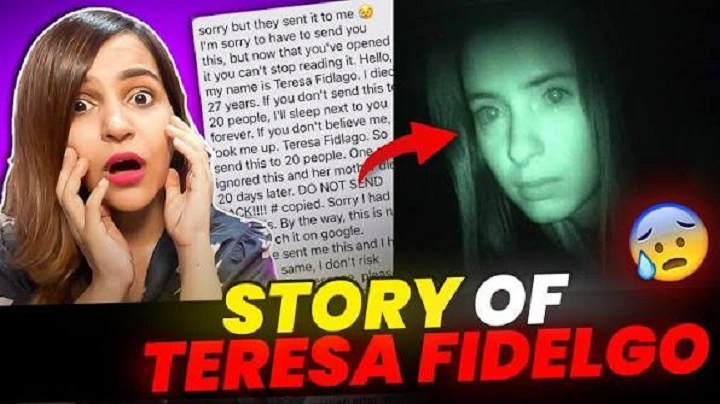
Teresa Fidalgo’s tale tends to surface as a standout among made-up horror clips lately – an eerie fiction built so thick it felt real. Yet what slips under notice is how her claimed 2006 crash outside Sintra, Portugal, turned into a textbook example of internet-born myth instead of a sad event remembered. Authorities never logged that wreck. Local law enforcement had no file on it. Not one trustworthy media source mentioned anything back then. Years passed before the whole thing took shape via a brief movie called The Stroll O Passeio, dropped online by someone unknown roughly in 2013.
The Origin of the Teresa Fidalgo Story
One shaky clip came from what looked like a broken camera near wreckage. Driving after dark, some pals spotted someone strolling along an empty highway. The stranger got inside their vehicle. Things felt off fast – then she disappeared. Moments later, she sat behind them, yelling. People heard later it involved a woman named Teresa. This never actually happened. Just made-up scenes built to feel true.
How the Myth Spread Online
Out of what came next emerged a deeper truth than the lie ever showed: how fast doubt crumbles when shape beats source. Acceptance wasn’t enough – retellings grew wilder. Phony reports popped up, traced back to a paper that never wrote them. Talk shifted to gravesites, guesses swirling around where she might rest. Others swore they’d heard firsthand stories from those who lived through it. Some shared pictures of memorials by the road – ones that were never really there. What wasn’t found started to feel like a clue; missing documents treated as hidden truth.
Why So Many People Believed It
This idea shows up elsewhere, yet the shape of Teresa’s story stands out. Not like old tales handed down by word of mouth, this one shifted fast – within months – and grew stronger because systems pushed it forward. What got attention thrived, even when wrong. People questioning proof vanished beneath waves of responses calling it real – “It gave me goosebumps,” “a close friend lived through it.” Belief held firm, fed again and again, fact or not.
The Found Footage Effect
What really grabs attention is how movies are shot. Using shaky cameras, bad light, sudden edits – these choices pretend to be real life. It feels unpolished on purpose. People began seeing such roughness as truth after watching The Blair Witch Project. Flaws turn into proof, somehow. Most people think shaky videos haven’t been touched – so they trust them more. That gut reaction got used on purpose in The Stroll, where clips pretended to be raw phone footage years before dashboard phones were everywhere.
Why the Story Works Anywhere
Geographic uncertainty slips through the cracks. Though Sintra comes up often, many places stay unclear. Roads show up without names. Important markers are never pointed out. That gap lets imagination fill in spaces – people tuck familiar paths into the story. Some in Brazil saw it unfolding along roads outside São Paulo. Others in Argentina linked it to highways running south of Buenos Aires. Some American writers talked about close experiences on country highways. When it isn’t tied to one place, the tale shifts easily into someone’s own life.
The Role of Social Media
Timing mattered just as much. It showed up when online videos spread fast, and YouTube thrived on stuff that almost seemed real. Creepypasta channels grabbed it, added intense voiceovers, left out any warnings. Suggested clips boosted headlines such as “Actual Ghost Filmed Live,” pulling viewers away from facts. Once people noticed problems – like how the wreck broke every rule of motion, or the actor’s obvious foundation – it was too late. Truth slipped under while attention looked elsewhere.
The Psychology Behind the Legend
Most people think true believers are naive. Yet what’s really at play is how minds naturally work. Truth isn’t judged just by facts. It’s shaped by flow – like a tale with familiar beats: a traveler vanishing, woods gone quiet, fear arriving without warning. When pieces click together like gears, questions tend to fade. Out of old whispers comes Teresa’s story – echoes of La Llorona, shadowed travelers, blacktops steeped in doom. Familiar? That’s by design, shaped from dread passed down through years.
The Missing Evidence
Still, something feels quietly wrong. Not one family has stepped up to say they lost her. Nowhere is there a marker at places said to be where she died. Still, folks speak of Teresa Fidalgo like she once breathed air. That lack of sound – of proof – ought to weigh heavier. But online, feeling often beats fact every single time.
The Real Impact of the Story
Just because it’s made up doesn’t make it harmless. Some people felt unsettled long after viewing. Nights became restless. The act of driving started feeling tense. Fiction sparked real mental strain. That makes calling it “only a joke” far more difficult. When stories break free, outcomes grow separate from purpose.
Separating Fact From Fiction
Some say it’s fake. Clips get picked apart frame by frame. Carolina Delgado talks about being there, clear as day. The people behind the camera admit they made it. Yet, the fix never catches up to the rumor. Finding what’s real takes work. False stories move on their own.
Frequently Asked Questions
Is Teresa Fidalgo a real person?
The viral ghost story has no verified evidence proving that Teresa Fidalgo or the reported accident actually existed.
Is the Teresa Fidalgo story true?
No verified police records, news reports, or official documents support the story. It is widely regarded as a fictional internet legend.
Where did the Teresa Fidalgo story come from?
The story became popular after the short horror film The Stroll O Passeio circulated online.
Why did so many people believe the story?
The realistic filming style, social media sharing, and horror storytelling made many viewers think the events were real.
Who created the Teresa Fidalgo video?
The people behind the film later acknowledged that it was a fictional production created for entertainment.
Finding truth in Teresa Fidalgo doesn’t start with evidence. It grows where silence sits, heavy and unchallenged. Meaning builds not on facts, yet in spaces between words. In moments when shadows make belief easier than doubt.