
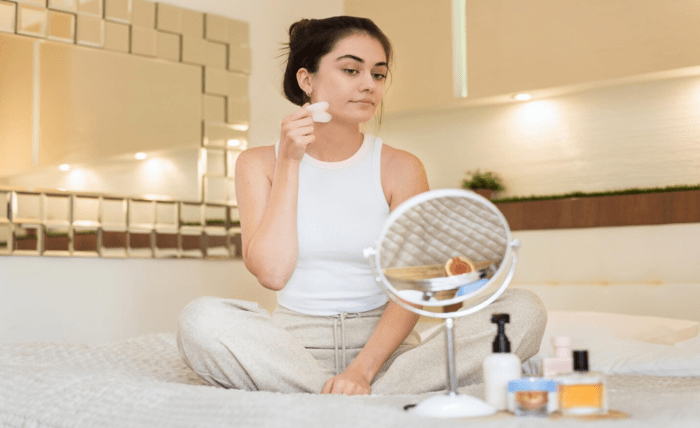
A distinct pattern of skin disruption often appears after excessive use of active ingredients. Your client says the routine was meant to smooth texture and brighten tone. The skin may feel warm, appear shiny, and react to previously tolerated products.
This is where skin barrier repair becomes the primary focus.
It usually does not happen with a single product. More often, it is the stacking. It might be a resurfacing cleanser with a nightly peel. It may also involve layering a vitamin A serum over exfoliating toner, or a brightening serum on skin that already feels tight.
Then, transepidermal water loss increases. The skin becomes more reactive, but not always dramatically. Sometimes it is subtle at first with tingling, flushing, and patchy roughness. This often progresses over time.
What Overuse of Actives Really Does
When actives are used too often or combined without enough recovery time, the skin does not simply become “sensitive.” The stratum corneum becomes less organized, hydration slips out more easily, and inflammatory signaling may remain activated longer than it should.
That means the skin stops behaving predictably. It can look oily and dehydrated at the same time. It can feel rough, yet appear thin and glossy. Although it is annoying, it is a common issue.
This is why aestheticians tend to read reactivity through function rather than through a single symptom. The issue is not merely irritation if the skin is:
- Stinging during cleansing
- Flushing after mild products
- Showing tightness around the mouth and eyes.
The recovery system is underperforming. In practical terms, barrier lipids are not keeping pace, and water balance is off. Also, the skin is now less tolerant of ingredients that felt fine a month ago.
Skin Barrier Repair Starts With What You Stop
The first move is not to add five “repair” products. The first move is subtraction. The first step is to pause:
- Exfoliating acids
Retinoids - Strong vitamin C formats
- Anything labeled refining, resurfacing, or clarifying if the skin is already showing obvious reactivity.
This does not compromise long-term results. Rather, it means stopping the inputs that keep the skin in a loop of low-grade distress.
Aesthetic practice gets this wrong sometimes because the urge is to fix fast. However, skin barrier repair does not respond well to panic layering. It responds to calm repetition, like a mild cleanse, a replenishing serum, a cushiony hydrator, and daily SPF.
What Recovery Looks Like in Real Time
Clients usually ask some version of the same question. How to repair skin quickly when it feels raw, flaky, and unusually shiny. The short answer is that rapid improvement in comfort is possible, while full functional recovery takes more patience.
The skin may appear calmer in a few days. Also, it may hold hydration better for a week or two. Yet consistent tolerance mostly returns more gradually. This is especially possible if the barrier was pushed for a while.
That early phase should remain intentionally simple. For instance, it is not about chasing glow or testing whether the skin can “handle just one exfoliating night.” Instead, the objective is to reduce friction and inflammation while rebuilding water retention.
In fact, a hyaluronic acid-based cream paired with ceramides might help here. This is because it supports both hydration and moisture retention.
- Draws in hydration
- Helps hold it where it belongs.
A Better Protocol for Dry, Reactive, Over-Processed Skin
An effective approach to dry skin barrier repair requires a more structural than cosmetic strategy. In other words, the goal is not immediate radiance. Rather, it is flexibility, comfort, and improved tolerance.
In fact, a formula choice matters here. Go for a skin-recovery serum followed by a hyaluronic acid cream with barrier-supportive lipids, including ceramides. This is more appropriate than active-led formulations in the initial phase. This is because the skin requires support rather than additional stimulation.
Step 1. Cleanse Without Chasing “Clean”
Use a gentle cleanser that removes residue without leaving the skin squeaky, tight, or hot afterward. If the face feels more comfortable one minute after rinsing than it did before cleansing, that is a useful sign. If it feels sharper or stingier, the cleanse is still too much.
Step 2. Add Water Back, Then Keep It There
This is where a replenishing serum earns its place. A recovery-focused formula with humectants can support hydration and flow, while ceramides help reinforce the lipid matrix, making the surface more resilient. Then follow with a hyaluronic acid cream. Not because HA is trendy, but because the skin needs layered water support plus a finish that reduces trans-epidermal water loss.
Step 3. Protect During the Day
Daily SPF matters even more when the barrier is off balance. Skin that is already reactive can become more visibly flushed and more uneven with incidental UV exposure. A moisturizing sunscreen or a peptide-rich SPF texture usually fits better than a chalky, drying formula that drags across the face.
Overused Actives vs. Repair-Focused Routine
| Skin State | What It Often Looks Like | What Usually Helps More |
| Active overload | Tightness, flushing, sting during cleansing, dehydrated shine | Pause exfoliants and retinoids, simplify the routine |
| Water loss dominant | Fine flaking, rough texture, dullness, makeup catching | HA-based hydration, ceramides, richer cream textures |
| Ongoing reactivity | Random redness, sudden intolerance, warmth after application | Low-disruption cleansing and consistent soothing layers |
| Premature restart of actives | Brief improvement, then recurring irritation | Longer recovery window and slower reintroduction |
Obviously, not every rough patch needs the same answer. Some skin is dehydrated but not inflamed. Meanwhile, some are inflamed but not severely flaky. Therefore, skin irritation repair should be based on what the skin is doing now, not what the original routine was trying to accomplish three weeks ago.
Common Mistakes That Slow Recovery
The most common errors are not dramatic. They are often persistent, and that is why they keep the skin stuck.
- Restarting acids as soon as redness fades contributes to repeated sensitivity.
- Washing with hot water may increase the risk of more surface dryness and visible flushing.
- Using too many “soothing” products at once might confuse the routine and make reactions harder to track.
- Scrubs, cleansing brushes, and textured pads mostly prolong roughness when the skin is already compromised.
A steady protocol usually outperforms a complicated one. This part can be difficult for clients to accept, though it is often the truth. In general, real skin barrier repair depends on restraint just as much as it does on ingredients.
| Clinical Insight: If the skin still stings when a basic moisturizer goes on, the recovery phase is not over. This is not the stage to reintroduce exfoliation. Rather, it is the moment to keep the routine plain and consistent for several more nights. |
When to Reintroduce Actives, and When Not to
Actives should come back one at a time, not all at once. Also, there must be no stinging, persistent tightness, or hot patches after cleansing. Start with the least disruptive option and introduce it at a lower frequency than anticipated. Two nights a week can be enough at first. In some cases, once weekly is more appropriate.
Aestheticians mostly find that reintroduction works better when hydration remains the anchor of the routine. That means the repair products do not disappear once the skin looks better. Rather, they stay in place around the active.
This is where skin barrier repair becomes maintenance rather than an emergency response. Also, that shift tends to prevent the same cycle from repeating.
Calm Skin Holds Progress Better
Overuse of activities often leads to the misconception that additional correction will resolve the issue. Usually, the opposite is true. Skin recovery is most effective when pressure drops, hydration increases, and barrier lipids have room to do their job again.
That is the practical value of skin barrier repair. It restores function first, and then the results become believable again.
For clients caught in the cycle of irritation, the better path is slower, quieter, and far more strategic. A gentle cleanse, a recovery serum, a ceramide-supported hydrator with HA, and daily protection provide meaningful improvement when used consistently.
However, if the skin still feels unstable, the next move is not another activity. Rather, it is a more disciplined routine. Also, when needed, guidance from aestheticians who understand how to read recovery rather than just react.