
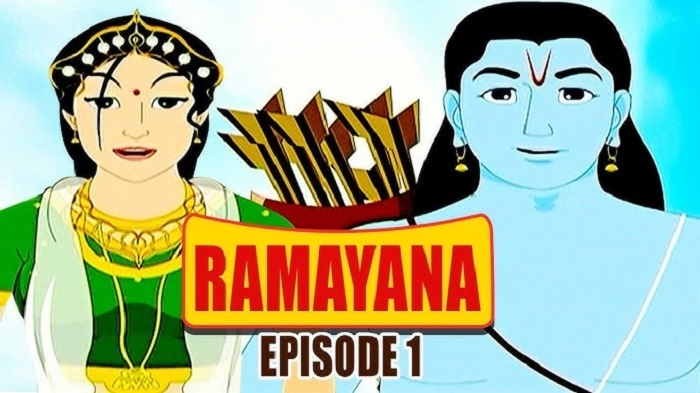
The Ramayana, one of the two great epics of Indian literature, is a captivating narrative filled with adventure, heroism, and lessons in morality. Written by the sage Valmiki, this ancient text has been translated into many languages, and its story continues to influence the cultures of India and beyond. The tale of Lord Rama’s journey, his battles against the demon king Ravana, and his devotion to duty, makes the Ramayana more than just a mythological story—it’s a guide for living a righteous life. This article will provide a detailed overview of the Ramayana story in English, breaking down its key events, characters, and lessons.
The Birth of Lord Rama
The Divine Birth
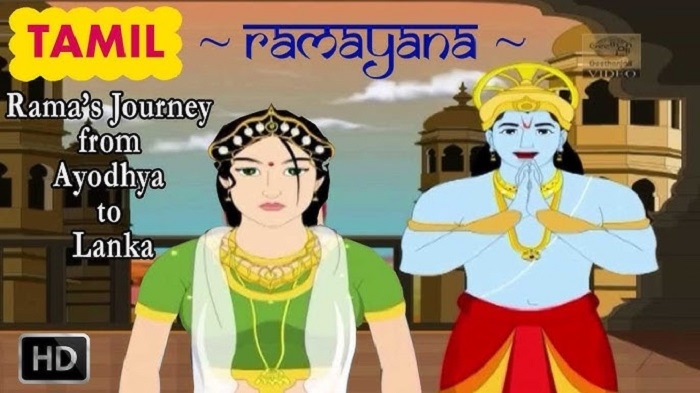
The Ramayana begins with the story of King Dasharatha, the ruler of Ayodhya, who had three queens but no heirs. After performing a sacred ritual, he was blessed with four sons. The eldest was Lord Rama, born to Queen Kausalya. Rama’s birth was marked by divine blessings, as he was the incarnation of Lord Vishnu, destined to rid the world of evil.
The Early Life of Rama
Rama’s childhood was filled with teachings of wisdom, martial arts, and righteousness. He was trained by the great sage Vashistha and grew to be a symbol of virtue. He was known for his humility, kindness, and dedication to his family and kingdom. As the story progresses, we see the strong bond between Rama and his family, especially with his younger brothers—Bharata, Lakshmana, and Shatrughna.
The Exile of Lord Rama
The Boon and the Curse
King Dasharatha, eager to fulfill his duties as a ruler, decided to crown his eldest son, Rama, as the next king. However, due to a promise made to his second wife, Kaikeyi, Dasharatha was forced to banish Rama to the forest for fourteen years. Kaikeyi demanded that her son Bharata be crowned king instead, and Dasharatha, bound by his oath, reluctantly agreed.
The Departure to the Forest
Rama, despite the injustice, accepted his father’s decision with grace, demonstrating the virtues of obedience and respect. His wife, Sita, and his devoted brother, Lakshmana, chose to accompany him on his exile. Together, they ventured into the forest, leaving behind the comforts of the palace.
The Abduction of Sita
The Golden Deer
While in the forest, Rama, Sita, and Lakshmana encountered many challenges. One day, a golden deer appeared before Sita, and she asked Rama to capture it for her. Despite Lakshmana’s warnings, Rama pursued the deer. During his absence, the demon king Ravana, disguised as a hermit, abducted Sita and took her to his kingdom, Lanka.
The Search for Sita
Upon realizing Sita’s disappearance, Rama and Lakshmana were filled with grief. Rama sent out search parties, and with the help of Hanuman, the mighty monkey god, they discovered Sita’s whereabouts in Lanka. This marked the beginning of Rama’s journey to rescue his wife and confront the forces of evil.
The Battle Against Ravana
Allies and Armies
Rama, with the help of Hanuman, Sugriva, and other powerful allies, gathered an army of monkeys to wage war against Ravana’s forces. The journey to Lanka was filled with intense battles, strategies, and alliances. Hanuman’s devotion to Rama, his ability to fly, and his strength made him an invaluable ally in this war.
The Final Confrontation
The war between Rama’s forces and Ravana’s army culminated in a fierce battle. In the end, Rama faced Ravana in a final showdown. With his divine weapon, the Brahmastra, Rama struck Ravana, killing him and ending his reign of terror. Sita was finally rescued, but the trials did not end there.
The Return to Ayodhya
The Homecoming
After the victory over Ravana, Rama, Sita, and Lakshmana returned to Ayodhya. Rama was crowned as the king, fulfilling his destiny. His return was celebrated with great joy and festivity, symbolizing the triumph of good over evil.
The Test of Sita’s Purity
Despite the victory and Rama’s joy, doubts arose about Sita’s purity due to her time in Ravana’s captivity. To prove her chastity, Sita underwent a trial by fire, which she passed unharmed, showcasing her unwavering devotion to her husband and the gods.
Key Characters in the Ramayana
Rama: The Ideal Hero
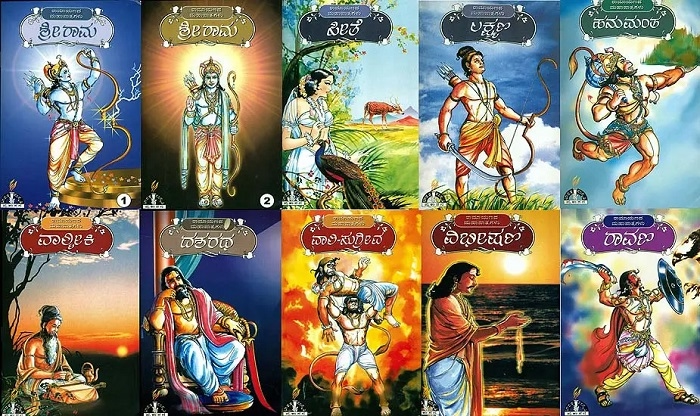
Lord Rama is the protagonist of the Ramayana, embodying the values of dharma (righteousness), loyalty, and duty. He is a symbol of virtue and is often revered as Maryada Purushottama, the ideal man. His actions throughout the story reflect his commitment to truth and honor, even in the face of adversity.
Sita: The Embodiment of Purity
Sita, Rama’s wife, represents purity, self-sacrifice, and devotion. Her abduction by Ravana and subsequent trials are pivotal moments in the story. Despite the hardships she faced, she remained steadfast and devoted to her husband, illustrating the strength of a woman’s character.
Lakshmana: The Loyal Brother
Lakshmana, Rama’s younger brother, is a loyal companion and warrior. His devotion to Rama and his determination to stay by his side during the exile are key aspects of his character. Lakshmana’s relationship with his brother exemplifies the ideals of brotherhood and loyalty.
Hanuman: The Divine Devotee
Hanuman, the monkey god, is one of the most beloved characters in the Ramayana. His strength, intelligence, and devotion to Lord Rama make him a central figure. Hanuman’s unwavering faith in Rama and his selfless service demonstrate the power of devotion and courage.
Ravana: The Demon King
Ravana, the antagonist of the Ramayana, is a complex character. Despite his wisdom and power, his arrogance and greed led him to abduct Sita, triggering the epic battle. Ravana’s character represents the dangers of ego and the fallibility of even the most powerful beings.
Lessons from the Ramayana
The Importance of Duty (Dharma)
One of the central themes of the Ramayana is dharma, or the right course of action. Rama’s unwavering commitment to duty, even at great personal cost, serves as a model for how individuals should uphold their responsibilities, both to their family and society.
The Power of Devotion
The Ramayana emphasizes the importance of devotion—whether it’s Rama’s devotion to his father, Sita’s devotion to Rama, or Hanuman’s devotion to his lord. Devotion leads to the fulfillment of one’s purpose and the achievement of great success.
The Triumph of Good Over Evil
The battle between Rama and Ravana is symbolic of the struggle between good and evil. The Ramayana teaches that righteousness, though often tested, will ultimately prevail, even against overwhelming odds.
FAQs
What is the Ramayana about?
The Ramayana is an ancient Indian epic that narrates the story of Lord Rama, his exile, the abduction of his wife Sita by the demon king Ravana, and his battle to rescue her.
Who wrote the Ramayana?
The Ramayana was written by the sage Valmiki, and it is considered one of the two great epics of Indian literature, alongside the Mahabharata.
What are the main themes of the Ramayana?
The main themes of the Ramayana include dharma (righteousness), devotion, loyalty, the triumph of good over evil, and the importance of family and duty.
Why is Lord Rama considered an ideal hero?
Lord Rama is revered for his commitment to duty, his moral integrity, and his unwavering devotion to his family, making him the embodiment of dharma.
What lesson does the Ramayana teach?
The Ramayana teaches the importance of virtue, righteousness, duty, and devotion, and how these values lead to success and the triumph of good over evil.